
Lynn A. Haller, MSW, LCSW, is a trauma-informed therapist and educator with over 25 years of experience bringing Internal Family Systems concepts to life through story. Her first children's book, The Hallway of Doorknobs, helps young readers meet their protective inner parts as characters they can understand and befriend.
Latest posts by Lynn A. Haller (see all)
- Behind the name: Sara - October 7, 2026
- Behind the name: Manuel - October 5, 2026
- Behind the name: Amira - October 1, 2026
What a Foal Taught Me About Grief, Presence, and Resilience
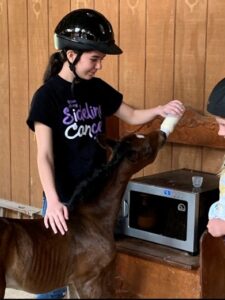 The foal was less than 24 hours old when I met her. Her mother hadn’t survived the birth, and the tiny creature’s ribs showed through her coat like she might disappear entirely.
My daughter had been taking riding lessons at this farm for years, but nothing prepared us for this moment. The farm community had already created a volunteer schedule to bottle-feed the orphaned foal. My daughter fed her right before her lesson that day and immediately signed up for more shifts.
Many of us face moments when we don’t know how to help a loved one, a child, or even ourselves. We want to fix the pain, yet sometimes the greatest gift is calm presence. That afternoon at the farm, this truth became clear to me in an unexpected way.
The foal was less than 24 hours old when I met her. Her mother hadn’t survived the birth, and the tiny creature’s ribs showed through her coat like she might disappear entirely.
My daughter had been taking riding lessons at this farm for years, but nothing prepared us for this moment. The farm community had already created a volunteer schedule to bottle-feed the orphaned foal. My daughter fed her right before her lesson that day and immediately signed up for more shifts.
Many of us face moments when we don’t know how to help a loved one, a child, or even ourselves. We want to fix the pain, yet sometimes the greatest gift is calm presence. That afternoon at the farm, this truth became clear to me in an unexpected way.
An Unexpected Moment of Connection
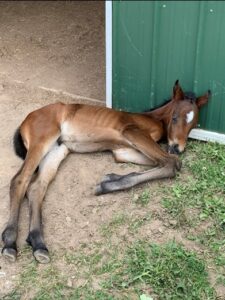 As my daughter prepared for her lesson, the foal wandered about. Her legs were shaky, ribs visible, and the weight of loss seemed to hang on her small frame. I reached out, stroking her side. To my surprise, she stayed. Then she folded down onto the ground near me and stretched out. I moved closer and started to gently pet the foal. I could feel her body relax, and she fell asleep leaning against me.
I had never been this close to a foal before. It was both sad and beautiful. A moment of grief and tenderness interwoven. A compassionate, nurturing part of me knew exactly what to do: be still. A worried part wanted to solve the unsolvable and to take away her loss. But in that moment, calm presence was the only gift I could offer.
As my daughter prepared for her lesson, the foal wandered about. Her legs were shaky, ribs visible, and the weight of loss seemed to hang on her small frame. I reached out, stroking her side. To my surprise, she stayed. Then she folded down onto the ground near me and stretched out. I moved closer and started to gently pet the foal. I could feel her body relax, and she fell asleep leaning against me.
I had never been this close to a foal before. It was both sad and beautiful. A moment of grief and tenderness interwoven. A compassionate, nurturing part of me knew exactly what to do: be still. A worried part wanted to solve the unsolvable and to take away her loss. But in that moment, calm presence was the only gift I could offer.
From Stillness to Play: Witnessing Resilience
Later, my daughter and another rider ran into the indoor arena. The foal, energized after her nap, joined them and started galloping and chasing them in joyful circles. I couldn’t look away from that tiny creature shifting from exhaustion and loss to something like joy. It reminded me that joy can persevere, even in fragile beginnings.What IFS Teaches Us About Calmness
When the foal lay against me, I didn’t know if I was helping or intruding. A part of me felt scared to sit so close to something so vulnerable. But a wiser part knew that presence is a gift. I chose stillness. I chose to simply be present. And somehow, she seemed to borrow my calmness, finding enough safety to rest. In the Internal Family Systems (IFS) model, Calmness is one of the 8 Cs of Self. It isn’t about removing pain or changing circumstances. It’s about being grounded enough to create a safe space for life to keep unfolding, exactly as it is. Our anxious parts want to fix, solve, and manage grief. But when we can bring forth Self-led calmness, we offer our inner system and others what that foal needed: a non-anxious presence that makes it safe enough to rest, to grieve, and eventually, to play again. Calmness does not erase suffering, but it makes space for it to be held without being overwhelming.The Small Steps of Calmness
How do we develop this quality? It often starts in small, foal-like steps:- Sitting still when you want to rush in and fix.
- Breathing deeply when emotions feel too heavy.
- Offering presence, not solutions, to yourself or others.
A Reflection for Your Journey
Calmness is a bridge. It allows both our pain and our hope to exist side by side. It reminds us that healing is not about speed, but about safety and presence.- Where in your life is a part of you trying to “fix” something that can’t be fixed?
- What might it feel like to offer calm presence to yourself or someone else instead of solutions?
- What does your body tell you when you’re in the presence of someone who is truly calm?
- When have you, like the foal, been able to borrow calmness from someone or something else? What made that possible?