


- Behind the name: Sara - October 7, 2026
- Behind the name: Manuel - October 5, 2026
- Behind the name: Amira - October 1, 2026
Seeing the Friend Behind the Shield
Finding Compassion in Healing: Seeing the Friend Behind the Shield
The first unit meeting under our new supervisor, my body went tense. Around the table, coworkers exchanged glances, but no one said much. Her voice was sharp and loud, carrying a clear message: we’re going to do things my way. After our previous supervisor, who was soft-spoken, empathetic, trusting, and collaborative, this felt like a shock. Like dread.
It wasn’t her childhood amputation that kept me at a distance. It was her tone and her direct communication style that seemed to say, “I don’t care about anyone or what they think.” Her way of not inviting personal connection.
That part of her was very successful at keeping people away. Me included. I joined the ranks of coworkers who found it easier to just avoid interactions with her.
An Unexpected Opening
I don’t remember what broke the ice. Maybe it was a shared complaint about paperwork or a comment about the coffee, but one day we started actually talking. I realized we had a lot in common. I was still skeptical and didn’t try to initiate conversations, but surprisingly, she did.
Over the next months, we became fast friends. I started to feel a true bond with her, even though my other coworkers didn’t understand. When I was dealing with a difficult parent situation one night, she stayed late to help me, no questions asked. That’s when I realized her loyalty ran deep.
Seeing Beneath the Surface
As our friendship grew, she shared some of the difficulties she faced living life as an amputee. One of her biggest challenges was dating and finding someone who would accept a girl with one hand.
She told me stories of guys who dated her as dares from their friends, of men who seemed interested but then never called back, and of others who couldn’t stop staring at the place where her hand should have been. She described the constant stares and questions from children and adults alike: “What happened to your hand?”
Once she talked to me like a friend, once she shared her struggles, I stopped seeing the sharpness as who she was. I saw it as something she carried. A shield she’d built to survive rejection after rejection.
I didn’t have IFS language back then. I just knew something had shifted in how I saw her. Years later, IFS gave me words for it: protector parts. Her sharp tone wasn’t her identity. It was a protector doing the job of keeping her safe from more pain.
In IFS, Compassion is one of the 8 Cs of Self. It’s what lets us get curious about what someone’s protecting instead of judging them for the walls they’ve built. Compassion came for me not because I felt sorry for her, but because connection let me see the whole person, not just the part that pushed people away.
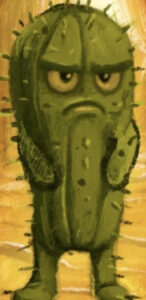
In my children’s book, The Hallway of Doorknobs, there’s a cactus-shaped doorknob. Inside the door, we find a character that looks like a cactus and tells its story. When the children in the book offer connection instead of judgment, Cactus feels a little less alone. A little less prickly.
Compassion in Letting Go
It felt like the friendship was deepening, and then my circumstances changed, and I moved. I’ll never forget the realization that this great friendship was not going to continue as it had been.
Once I moved away, our lives naturally drifted apart. I felt a deep sadness, not only at the loss of the friendship but also at my earlier inability to see past her protector parts. In some ways, parts of me felt like I was abandoning her, knowing she didn’t have many close friends.
A Reflection for Your Journey
- Have you ever mistaken someone’s protector parts for their true self?
- What compassion might come if you looked beneath the prickles of the protector and found the person behind them?
- In what ways do your own protector parts show up, and what are they trying to keep safe?
This post is part of my monthly series exploring the 8 Cs of Internal Family Systems, a framework that shapes how I teach, write, and support healing. The 8 Cs are qualities described by Dr. Richard Schwartz, founder of the Internal Family Systems (IFS) model.